



What is Pans: Complete Guide to Cooking Pans for Indian Kitchens
When setting up an Indian kitchen, understanding the types of pans and selecting the right cooking pans can significantly enhance your culinary experience. The pans meaning goes beyond simple cookware—they're essential tools that determine how well your food cooks, how much oil you need, and how easy cleanup will be.
Understanding Cooking Pans for Indian Cooking

Pans are shallow vessels with a flat bottom and raised edges, designed for a variety of cooking techniques. Unlike the traditional Indian kadhai or tawa, modern pans offer versatility in cooking both traditional and contemporary dishes. From making dosas to stir-frying vegetables or cooking one-pot meals, the right pans make cooking efficient and enjoyable.
Essential Types of Pans for Indian Kitchens
Frying Pans (Skillets) -

The most versatile option, frying pans are perfect for making uttapams, frying pakodas, or sautéing vegetables. Their wide surface area allows heat to be distributed evenly, making them ideal for Indian cooking techniques that require frequent stirring.
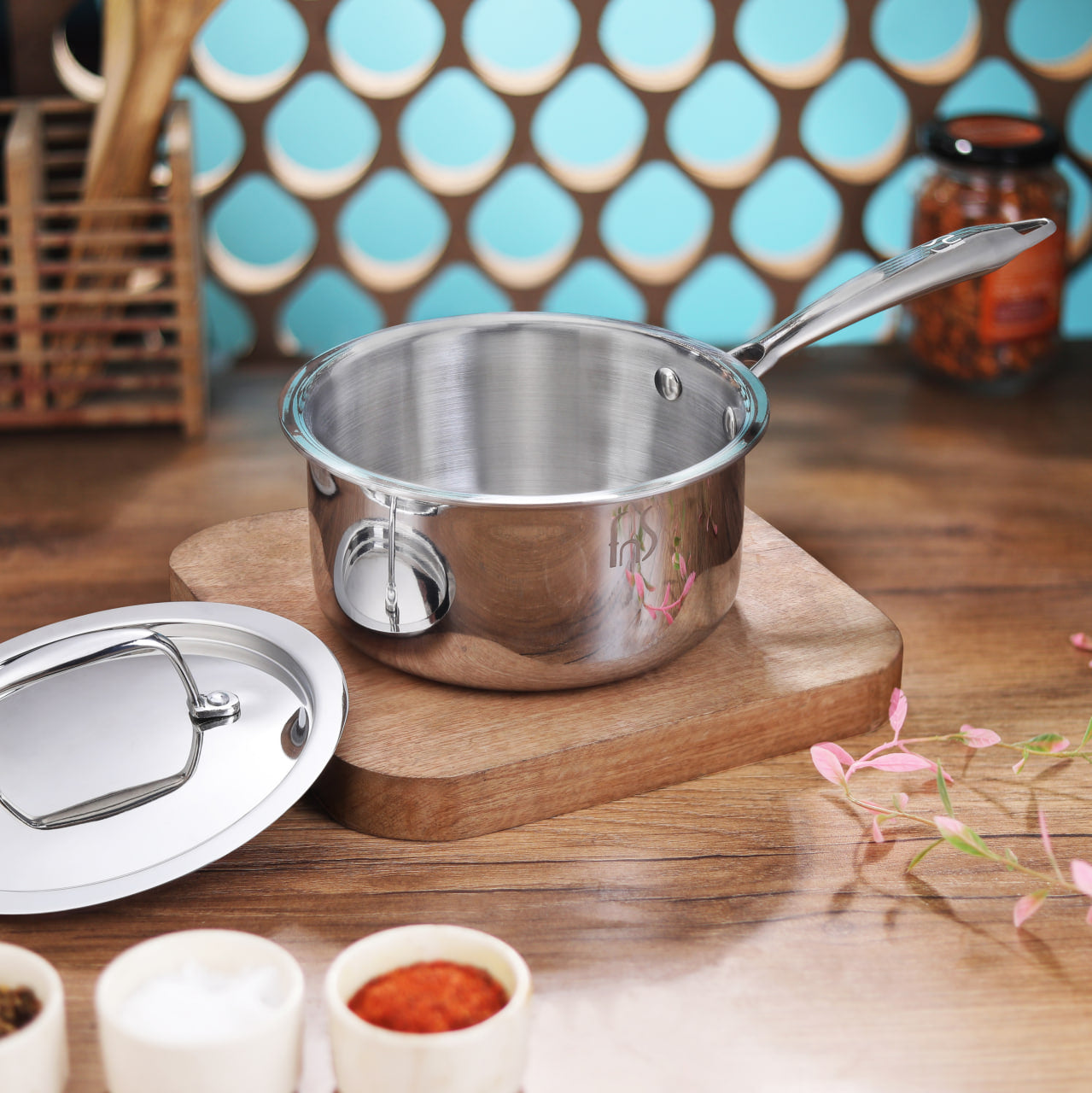
A saucepan is a must-have in an Indian kitchen. With its deep walls and small diameter, a saucepan is useful for making gravies, boiling milk for tea, making dal, or cooking rice. Its tall sides prevent splashes when tempering or reducing a curry base. Every Indian household should have at least one medium-sized saucepan for everyday use.
Non-Stick Pans - Perfect for health-conscious cooking, non-stick pans require minimal oil—ideal for making dosas, rotis, or egg dishes. They're especially useful for dishes that tend to stick, like paneer or fish dishes..
Why Stainless Steel Pans Are Popular
Stainless steel pans have become increasingly popular in Indian kitchens for good reasons. These durable cooking pans don't react with acidic ingredients like tomatoes, tamarind, or yogurt, which are staples in Indian cooking. Stainless steel pans offer excellent heat retention, making them perfect for bhunao techniques where ingredients need consistent high heat.
The advantages of stainless steel pans include:
-
Durability: They last for decades with proper care
-
Versatility: Suitable for all cooking methods from sautéing to braising
-
Non-reactive surface: Won't alter the taste of acidic curries or chutneys
-
Oven-safe: Most can transition from stovetop to oven
-
Easy maintenance: Can be scrubbed thoroughly without damage
Choosing the Right Pans for Your Kitchen
When selecting cooking pans, consider these factors:
-
Size variety: Have different sizes for various cooking needs—small sauce pan for tadkas, medium for gravies, and large frying pans for sabzis
-
Handle comfort: Ensure handles stay cool and provide a secure grip
-
Weight: Heavier pans retain heat better, but lighter ones are easier to handle
-
Compatibility: Check if pans work with your cooktop type (gas, induction, electric)
Caring for Your Pans
Proper maintenance extends the life of your cooking pans. Stainless steel pans benefit from occasional cleaning with baking soda paste to maintain their shine. Non-stick pans require gentle handling—avoid metal utensils and abrasive scrubbers. Always allow pans to cool before washing to prevent warping.
Conclusion
Understanding what pans are and choosing the right cooking pan can transform the functionality of your kitchen. Whether you choose stainless steel pans for durability or non-stick options for convenience, investing in high-quality cookware ensures years of reliable service. A well-equipped Indian kitchen usually requires a combination of these: a good saucepan for gravies, a large frying pan for vegetables, and perhaps a non-stick pan for delicate dishes. Choose wisely, and your pans will help you with countless dishes.
Frequently Asked Questions
1. What is the difference between a pan and a kadhai?
Pan has a flat bottom and shallow or medium-height sides, while kadhai has a rounded bottom and deep sides. Pans works better on modern cooktops, while kadhai is designed for traditional Indian cooking techniques with high heat.
2. Can I use stainless steel pans on induction cooktops?
Not all stainless steel pans are induction-safe. Choose pans with a magnetic base layer. Check the product specifications or test with a magnet—if it sticks to the bottom, the pan will work on induction.
3. How many pans does an Indian kitchen need?
A typical Indian kitchen requires at least three pans: a small saucepan for tadka and milk, a medium saucepan for dal and gravy, and a large frying pan (10-12 inches) for sabji and general cooking.
4. Are non-stick pans safe for Indian cooking?
Yes, good-quality nonstick pans are safe when used correctly. Avoid overheating (keep temperatures below 260°C), use wooden or silicone utensils, and choose PFOA-free options. These are great for dosas, eggs, and low-oil cooking.
5. Why does food stick to my stainless steel pans?
When the pan isn't heated properly or doesn't have enough oil, food can stick. Heat the pan first, add the oil, let it shimmer, then add the food. Also, avoid moving the food too quickly—let it crust over first.
6. What size sauce pan is best for making dal?
For a family of 4-5 people, a 2-3 liter (medium-sized) saucepan is ideal for lentils. This provides enough depth to prevent the lentils from overflowing during boiling and provides sufficient capacity for daily needs.
7. Can I put pans in the dishwasher?
Stainless steel pans are generally dishwasher safe, although handwashing is preferable for long-term use. Never put non-stick pans in the dishwasher, as harsh detergents can damage their coating. Always check the manufacturer's instructions.
8. What's better for Indian cooking: aluminum or stainless steel pans?
Stainless steel pans are better for Indian cooking because they don't react with acidic ingredients like tomatoes, tamarind, or kokum. Aluminum utensils heat up quickly but can react with acids, affecting taste and health.
9. How do I remove burnt food from cooking pans?
For stainless steel Pans, boil water with baking soda and then scrub. For stubborn stains, make a paste of baking soda and water, let it sit overnight, and then scrub. Avoid harsh rubbing on non-stick surfaces.
10. Do I need different pans for gas and induction stoves?
Gas stoves work with all pan types. Induction stoves require pans with magnetic bottoms (usually stainless steel with a magnetic base or cast iron). Some aluminum and copper pans have induction-compatible bases, so always check specifications.
